Loading...
First Round of Abstract Submission Ends: Aug 15, 2026
Extended Early Bird Ends: Jan 30, 2026

Plenary Speakers

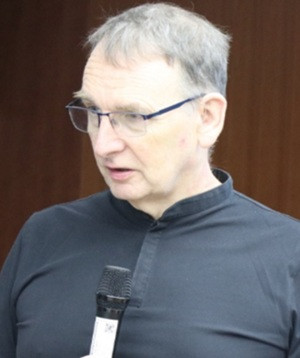
Prof. Vladimir Tolmachev
Uppsala University, Sweden
Title: Development of engineered scaffold proteins for targeted therapy and radionuclide visualization of molecular targets in cancer
Will update soon.
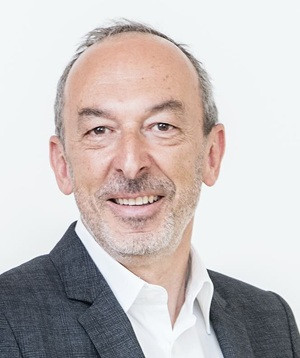
Prof. Thomas Webster
Hebei University of Technology, China
Title: 40,000 Nano Implants in Humans: Returning Mobility with No Infection or Failure
Will update soon.
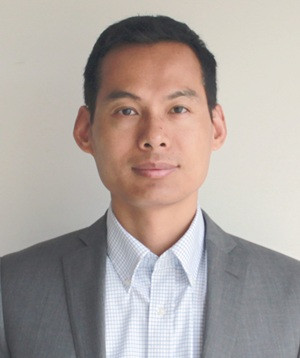
Prof. Tony Cass
Imperial College London, UK
Title: The Role of Analytical Science in Combatting Antimicrobial Resistance
Tony graduated from the Universities of York and Oxford where he received respectively BA and DPhil degrees in Chemistry. It was during a research fellowship in Oxford that Tony invented a much more efficient way to transfer electrons from the active site of a redox enzyme to a carbon electrode. This apparently esoteric invention led a small UK company to produce the first fully electronic device to accurately measure glucose in a tiny drop of blood at home and revolutionised the management of diabetes for millions of patients around the world. It also bought Tony back to London and an appointment at Imperial College where he helped establish a Centre for Biotechnology. His current research is at the intersection of chemistry, biomedical engineering and clinical diagnostics developing new sensing devices, especially point of care diagnostics and wearables that allow for the real time monitoring of the body’s chemistry.
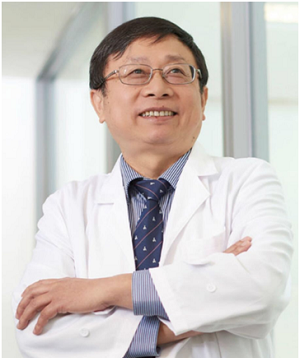
Prof. J.-C. Olivo-Marin
Bioimage Analysis Unit, Institut Pasteur, France
Title: Bioimage analysis: Methods, tools and applications
Jean-Christophe Olivo-Marin is the Head of the Bioimage Analysis unit and the director of the institut Carnot Pasteur Microbes et Santé. He chaired the Cell Biology and Infection Department (2010-2014) and was CTO and Director of the Center for Innovation and Technological Research (2015-2018) at Institut Pasteur. Previous to that, he was a Staff Scientist at the European Molecular Biology Laboratory, Heidelberg, from 1990 to 1998. He received the PhD and HDR degrees in optics and signal processing from the Institut d’Optique Théorique et Appliquée, University of Paris-Orsay, France. He is a Fellow of IEEE, SPIE, OPTICA, and AAIA, and an IEEE Signal Processing Society Distinguished Lecturer. He is the recipient of the Distinguished Service Award from IEEE Engineering in Biology and Medicine Society and of the Prix Thérèse Lebrasseur from Fondation de France. His research interests are in mathematical and machine learning approaches for bioimage analysis, computer vision and biophysics analysis for cellular dynamics.
Prof. Jingwei Xie
University of Nebraska Medical Center, USA
Title: To be confirmed.
Will update soon.
Prof. Guo-Wei HE
Tianjin University, China
Title: Post-translational modifications of protein in cardiovascular diseases
Professor Guo-Wei HE, MD, PhD, DSc, is Distinguished Professor of Tianjin University, China and Academician (Foreign Correspondence Member) at The National Academy of Medicine, France (2019-). Professor He is Vice President & Senior Cardiac Surgeon at TEDA International Cardiovascular Hospital, Tianjin University and Director of Institute for Cardiovasc Diseases, Tianjin University & Chinese Academy of Medical Sciences. He also holds Clinical Professor of Surgery at Oregon Health & Science University, Portland, OR, USA (2003-). In addition, Professor He is Director, Branch Center for National Clinical Research Center for Cardiovascular Disease and Director of Tianjin Key Laboratory for Molecular Regulation and Translational Medicine of Cardiovascular Diseases. He obtained Doctor of Science (2003) and Ph. D.(1989) from Monash University, Melbourne, Australia. Professor He was Chair Professor of Cardiothoracic Surgery, University of Hong Kong, 1995-2000 and Research Chair Professor, Chinese University of Hong Kong (2000-2009). Professor He was Director of Cardiovasc Res Lab, St, Vincent Hospital, Portland, OR, U.S.A. (1994-2012). Professor He is an active cardiac surgeon and he performed about 8,000 open heart operations. Notably, he is the first surgeon performing radial artery plus internal mammary artery in CABG at University of Hong Kong in Asia (1995) and is well known for “He Classification” and “He solutions” for CABG grafts. Apart from clinical practice, he is an active research on basic science at the molecular (genetic and protein) level and obtained more than 80 research grants and awards such as First Class Award, Tianjin Municipal Natural Science Award (2012); Prize of China Medical Award (2013); First Class Award, Prize of Science & Technology, The China Medicine Education Association (2021), exec. Professor He has supervised PhD students and postdoc for more than 30 years. He published 440 articles/reports in SCI-index international journals. 5 articles in Circulation (IF:39.918), and articles in Signal Transduction and Targeted Therapy (IF: 52.7), Lancet (IF:168.9), Lancet Digit Health (IF: 36.615), Nature Reviews Cardiology (IF: 44.2), Nature Communication (IF:17.694), Journal of Heart and Lung Transplantation (IF:13.569), Cardiovascular Research (IF:13.081), Clinical and Translational Medicine (IF:10.6, exec.) In addition, as a surgeon, published 90 cardiac surgery articles in the two major international journals for cardiac surgery (37 inJ Thorac Cardiovasc Surg and 53 in Ann Thorac Surg). He ranks the top 0.05% of all scholars worldwide (Medicine•Cardiology•Thorax; ScholarGPS) in 2024-2025, World's Top 2% Scientists (2019-2025) by Stanford University and H-index of world top 1%. Professor He ranks world’s top 1% in Medicine, Chemistry, Genetics and Molecular Biology; He is Highly-cited Chinese Scholar in Clinical Medicine (Elsevier 2024).
Prof. V. Prasad Shastri
University of Freiburg, Germany
Title: Bioprinting - The Path Ahead: Advanced bioinks through polymer network engineering, Implications for Tissue Engineering and Regeneration
Prasad Shastri is the Professor of Biofunctional Macromolecular Chemistry and the Director at the Institute for Macromolecular Chemistry and the BIOSS Professor of Cell Signalling Environments at the University of Freiburg. He received his PhD from Rensselaer Polytechnic Institute and carried out his post-doctoral work under the mentorship of Prof. Robert Langer at MIT. He has published over 250 peer-reviewed papers and extended abstracts and authored over 60 issued/pending patents in materials science, regenerative medicine, and tumor biology. He is an elected Fellow of the International Academy of Medical and Biological Engineering (IAMBE) (2024). His laboratory is active in the areas of 3D-bioprinting, cellular therapeutics, cancer biology, biomaterials for controlling cellular microenvironments, in vivo engineering of tissue, nano-biomaterials, polymer synthesis, polymer-melt processing, sustainable materials, and circular economy. He has published several notable papers in materials processing and engineering and on various aspects of regenerative medicine specifically bone and cartilage tissue engineering. He is active in MRS, TERMIS-EU, and the ACS and was the co-Chair of the Materials Research Society (MRS) fall 2020 meeting in Boston and is the chair and sole organizer (co-organized 2010-2019) of the Freiburg Macromolecular Colloquium, the oldest polymer meeting in the world and the largest in Europe. He has served as a guest editor on several occasions for notable journals including Advanced Materials.