Loading...
First Round of Abstract Submission Ends: Aug 15, 2026
Extended Early Bird Ends: Jan 30, 2026

Keynote Speakers

Prof. Shangming Zhou
University of Plymouth, UK
Title: Transforming Bladder Cancer Screening: Early Detection and Risk Stratification through Supervised Term Weighting and Particle Swarm Optimization Techniques
Dr. Shang-Ming Zhou is a distinguished Professor in eHealth at the University of Plymouth, UK, where he serves as the Chair of Operational Artificial Intelligence Group, and Deputy Director of the Centre for Health Technology in the Faculty of Health: Medicine, Dentistry and Human Sciences.

Dr. Zhou's work focuses on AI-driven personalized medicine, health informatics, health data science, disease phenotyping, risk stratification, polypharmacy, multimorbidity, and public health research. His research on integrating information from multiple sources through advanced methods of type-1 and type-2 OWA operators has paved the way for data integration and aggregation under uncertain environments. He leads different projects, advancing healthcare data analytics for patient-centric innovations. He has also been awarded externally funded grants worth over £10 millions. Dr Zhou is the member of Editorial Board for 15 international journals.
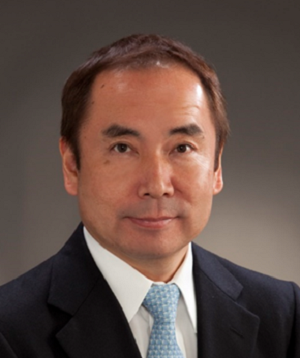
Prof. Tetsuya Shimamura
Saitama University, Japan
Title: Brain Signals Useful for Emotion Recognition
Tetsuya Shimamura received his B.E., M.E. and PhD degrees in Electrical Engineering from Keio University in Japan, in 1986, 1988 and 1991, respectively. In 1991, he joined Saitama University in Japan, where he is currently a Professor of Graduate School of Science and Engineering.

He was Head of Department of Information and Computer Sciences at Saitama University in 2012 and 2013, and Dean of Information Technology Center in 2014 and 2015. In 1995 and 1996, he joined Loughborough University, UK, and The Queen’s University of Belfast, UK, respectively, as a visiting Professor.

His research interests are in digital signal processing and its applications to speech, audio, image and communication systems. A various range of research is covered such as speech analysis, speech enhancement, image quality assessment, image restoration, wireless communication, sensor network and cognitive radio. He has published over 500 refereed journal articles and international conference proceedings papers. He is an author or co-author of eight books, and a member of the organizing committee of several international conferences.

He has received IEEE Pacific Rim Conference on Communications, Computers and Signal Processing, Gold Paper Award, in 2012, WSEAS International Conference on Multimedia Systems and Signal Processing, Best Paper Award, in 2013, and IEEE IFOST, Best Paper Award, in 2014. Also, he is a recipient of Journal of Signal Processing, Best Paper Award, in 2013, 2015, and 2016, and Yahagi Commemorative Award of Journal of Signal Processing, in 2018. He is an IEEE senior member.
Prof. Kunio Matsumoto
Kanazawa University, Japan
Title: Creation of High-Performance Biologics Replaceable to Growth Factors
Kunio Matsumoto (PhD) is Professor and Vise President of Kanazawa University in Japan. His specialty is biochemistry. In addition to basic research on growth factors and their receptors, he has experience to start venture to promote application of high-performance growth factors for therapeutics of diseases.
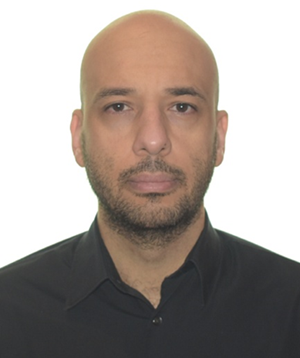
Dr. Hamidreza Namazi
Monash University, Malaysia
Title: Physiological-based signal processing for decoding the correlation between the brain and different organs' activities.
Dr. Hamidreza Namazi received his Ph.D. in Mechanical Engineering from Nanyang Technological University, Singapore. He has over 17 years of research experience in biomedical signal and image processing and is the author of more than 170 peer-reviewed articles in ISI journals. His research interests include mathematical and computational analysis and modeling of time series and patterns in mechanical and biomedical engineering. Dr. Namazi serves as an Associate Editor for several high-impact ISI-indexed journals and currently holds concurrent academic appointments at several universities across Europe and Asia.
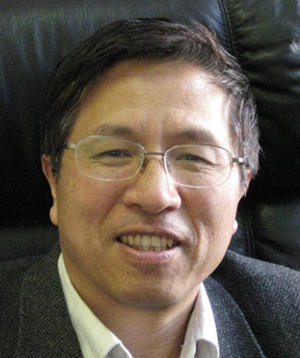
Prof. Yong Chen
Ecole Normale Supérieure of Paris, France
Title: From Organoids to Organoid-on-a-Chip: An Updated Strategy for Integration
Yong Chen is a CNRS Research Director (Emeritus) at the École Normale Supérieure (ENS, Paris). He has previously served as a Professor at ENS, an Adjunct Professor at Kyoto University (Institute for Integrated Cell–Material Sciences), a Lecture Professor at Peking University, and a Distinguished Chair Professor at The Hong Kong Polytechnic University.

With more than 20 years of experience spanning condensed matter physics and nanotechnology, his research over the past 25 years has increasingly focused on biophysics and organ-on-chip systems, addressing both fundamental scientific questions and industrial applications. He has authored or co-authored over 500 peer-reviewed journal publications and has played a major role in numerous European and national research projects.
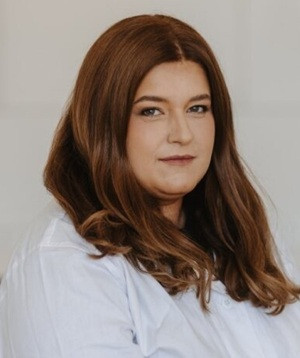
Prof. Ivana Šišoláková
Pavol Jozef Šafárik University in Košice, Slovakia
Title: Smart Non-Enzymatic Electrochemical Sensors for Rapid Point-of-Care Diagnostics
Dr. Ivana Šišoláková has been a University Associate Professor and Head of the Department of Physical Chemistry at the Faculty of Science, Pavol Jozef Šafárik University in Košice since 2022. Her research is focused on the development of novel electrochemical sensors for biomedical applications, particularly in disease diagnostics. For several years, she has been working on the design of non-enzymatic electrochemical sensors for insulin detection, offering a promising new approach to early-stage diabetes diagnosis. After the outbreak of the COVID-19 pandemic in 2020, her research shifted toward the development of electrochemical biosensors for the rapid and selective detection of viral pathogens, especially SARS-CoV-2.

She is the principal investigator of a research project supported by the NATO Science for Peace and Security Programme and has served as a principal investigator and co-investigator in numerous national and international research projects. She is the author and co-author of numerous scientific publications indexed in international databases (Web of Science and Scopus).
Prof. Yasuhiko Tabata
Kyoto University, Japan
Title: Regenerative Biomaterial to Realize Advanced Medical Therapy
Dr. Yasuhiko Tabata is the Professor Emeritus, Kyoto University and a Special Professor (full-time) of Tabata’s group ”Cell Biotechnology”, Department of Plastic and Reconstructive Surgery, Graduate School of Medicine, Kyoto University, and guest professors at the Graduate School of Medicine, Dentistry, Pharmaceutical Sciences, and Engineering of 17 different universities. He received his BD in Polymer Chemistry (1981), Ph.D. (1988) in Technology, D.Med.Sc. (2002), and D.Pharm. (2003) all at Kyoto University. He was a Visiting Scientist at the MIT (Professor Robert Langer) (1991-92). He has published 1,753 scientific papers including 146 book chapters and review articles and has 143 patents. He received the Young Investigator Award (1990), the Scientific Award from the Japanese Society for Biomaterials (2002), the Scientific Award from the Japan Society of Drug Delivery System (2011), Chandra P. Sharma Award of the International Society of Biomaterials & Artificial Organs (2011), the Scientific Award from the Japanese Society for Regenerative Medicine (2014), Merit Award Winners for Industry-Academia-Government Collaboration, President of Science Council of Japan Award (2016), Outstanding Scientist Award of the Tissue Engineering and Regenerative Medicine International Society - Asian-Pacific Chapter (TERMIS-AP) (2018), TERMIS-AP Excellent Achievement Award (2022), the Excellent Achievement Award from the Japanese Society for Biomaterials (2024), and several awards.

Dr. Tabata is the president of the Japan Society of Drug Delivery System (JSDDS), the board member of the Japanese Society of Regenerative Medicine (JSRM), the Japanese Society for Biomaterials (JSB), and the Japanese Society of Inflammation and Regeneration (JSIR), TERMIS-AP or the councilor of the Japanese Society of Wound Healing, the Japanese Artificial Organ Society, He is an associate member of the Science Council of Japan, Cabinet Office, a fellow of the World Biomaterials Society (WBS), the TERMIS, the Controlled Release Society (CRS) or the New York Academy of Science and American Institute for Medical and Biological Engineering (AIMBE), and the Founding Fellow for Tissue Engineering and Regenerative Medicine, (FTERM).

Dr Tabata is the one of founder members of Asian Biomaterial Federation (ABF). He is a board member of Tissue Engineering Society International for 2001-2003 and 2012-present. He organized as the chairman the 13th Annual Congress of JSRM (2014) and the 37th Annual Congress of JSB (2015), the 37th Annual Congress of JSIR (2016), and the 33th Annual Congress of JSDD (2017). He is a board member of TERMIS-AP for 2013-present and the president of TERMIS-AP for 2016-2020, and chairs the 5th TERMIS World Congress 2018, Kyoto, Japan.

His research is very interdisciplinary in nature and brings together the fields of polymer chemistry, pharmaceutical science, biology, and basic and clinical medicines. He actively proceeds with translational research by linking bioengineering scientists, clinicians, and industry to achieve clinical therapies of regenerative medicine as well as produce some commercialization products for basic research and cosmetics. His research focuses on the design and preparation of biodegradable or non-biodegradable biomaterials for their biological, medical, and pharmaceutical applications, while the keywords are biomaterials, drug delivery system (DDS), tissue engineering, regenerative medicine, stem cell technology, and medical diagnostics.